Mochi Ice Cream: A Special Treat (and Story) Worth Sharing
Mochi ice cream: A special treat (and story!) worth sharing
There’s a lot to love about mochi ice cream … each perfectly balanced bite, with adventurous flavors wrapped in delicate, chewy dough. It’s guilt-free, poppable and still manages to be decadent. But not everyone knows the story behind this go-to treat.

Simple and sweet
So what exactly is mochi? It is a Japanese rice dessert made from glutinous mochigome riceGo to Glutinous rice. “Glutinous” is actually a reference to the stickiness of the rice once it’s cooked and prepared, and it is, in fact, gluten-free.
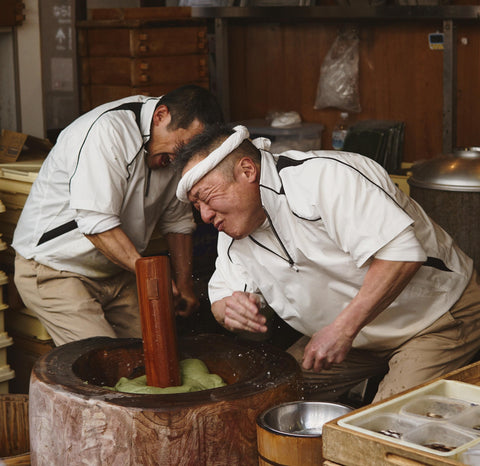
The rice is pounded into a paste or cake-like dough, sometimes with other ingredients, like sugar, water and coloring. It can then be formed into any shape, though you’re most likely to see it presented as a two or three-bite “dumpling,” and is filled with fruits and sweets, such as red bean paste.
“Food for the Gods”
According to folklore, the first ceremonies using mochi -- called “mochitsuki” -- occurred when Shinto spirits, or “Kami,” came down to earth, just as rice was first being cultivated during the Yahoi period (300 BC - 300 AD).
Mochi began to appear as imperial offerings at religious ceremonies and was considered “food for the gods”. Over time, it became a popular New Year’s treat, as early emperors believed the long strands of mochi dough symbolized long life and well-being.
Mirror Mochi
Even today, a special kind of mochi, called Kagami mochiGo to Kagami mochi is part of a Japanese New Year’s celebration. Consisting of two stacked mochi cakes, Kagami mochi represents the passage of time, moving from one year to the next.
In other traditions, these two mochi are considered a mirror image … or, some say, the moon and the sun. In a special ceremony, families first display the Kagami mochi, then eat it during the Kagami Biraki mochi-breaking ceremony on January 11th, which signifies moving from one year to the next.

The Rabbit in the Moon
Similar to western stories of the man in the moon, the Japanese tell the story of a rabbit in the moon -- and this one can be seen making mochi.
According to legend, an old man comes down from the moon to earth, where various animals bring him food to eat. The rabbit, however, with nothing to give, builds a fire and cooks himself.
As a reward for this sacrifice, the old man brings the rabbit to the moon where he lives on and makes mochi -- so it’s the shape of a rabbit pounding mochi that’s etched in the moon.

Crossing borders
Mochi can be found widely across Asian cuisines. Appearing in both dessert and savory forms, it is versatile and beloved. Mochi eventually made its way West, and by the early 1990’s, the U.S was introduced to mochi ice cream. Since then, the treat has been popping up in restaurants, grocery stores and dessert shops across the country.
Here at Mochidoki, we’re passionate about keeping the spirit and tradition of mochi alive … with Imagination in Every Bite, we’re excited to encourage everyone to explore new flavors, cultures and traditions.
Are there special flavors and traditions you’d like us to consider as we expand our mochi collection? Share your ideas with us!